
Anthony Davis doesn't just block shots—he erases them from memory. Watch him close out on a corner three, and you'll see a 6'10" forward moving with the footwork of a guard, his wingspan turning a routine closeout into a psychological trap. That blend of size and agility has defined his career, but it's the fragility beneath the spectacle that makes his story so compelling. In nine NBA seasons, Davis has never played all 82 games. Yet when he's on the floor, the Lakers' defensive rating routinely drops by nearly 5 points per 100 possessions—a swing that rivals Rudy Gobert's impact in Utah. The raw numbers are staggering: 23.5 points, 10.2 rebounds。and 2.4 blocks per game for his career. But numbers never capture the full picture of a player who once admitted he didn't touch a basketball until age 15 because he was too busy playing guard in Chicago's mean streets. That late start explains his guard-like handle and perimeter shooting—a rarity for a big man—but also his sometimes awkward post footwork.Davis's injury history reads like a medical textbook: ankle sprains, knee contusions, groin strains, Achilles soreness. Each absence sparks the same tired debate about his toughness. I've watched him gut through a separated shoulder in the 2020 Finals。scoring 19 points in Game 6 while grimacing on every rebound. That series cemented his legacy—but also his fragility. The Lakers' entire title window hinges on his availability. When he went down with a foot injury in December 2022, Los Angeles plummeted from fifth to thirteenth in the Western Conference within six weeks. LeBron James can will a team to wins, but he can't patrol the paint like Davis. That's the uncomfortable truth: Anthony Davis is simultaneously the Lakers' most indispensable player and their biggest risk.
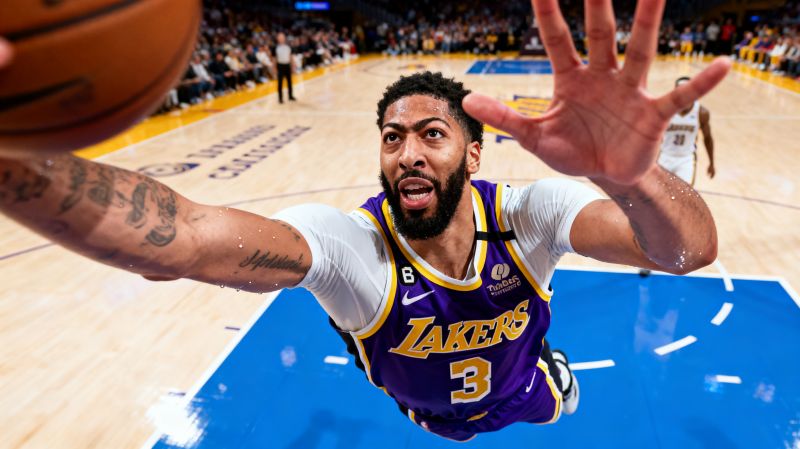
What separates Davis from other modern bigs is his defensive versatility. Switch him onto Damian Lillard at the three-point line, and he stays in front. Drop him into the paint against Nikola Jokić, and he holds his ground. He's one of three players in NBA history to average at least 2 blocks and 1 steal per game for five consecutive seasons。joining Hakeem Olajuwon and David Robinson. His 2020 Defensive Player of the Year snub—he finished second to Giannis Antetokounmpo—remains a sore spot for Lakers fans, but Davis rarely complains. Instead, he quietly anchors a defense that has ranked top-five in three of his four full seasons in Los Angeles. There's a quiet intelligence to his game: the way he angles his body to cut off drives, the timing of his weakside rotations. These aren't flashy plays, but they win games.Offensively, Davis remains a matchup nightmare. He can post up smaller defenders。face up slower ones, and hit mid-range jumpers with mechanical consistency. His 2023 playoff run against Memphis—20.8 points and 13.7 rebounds per game—showed a player who could dominate without forcing shots. But watch him closely, and you'll notice a hesitancy to shoot threes. He attempted just 1.3 per game last season, down from 3.5 in 2018. That reluctance clogs the paint for LeBron's drives. Critics call it passivity;I see a player managing his body, conserving energy for the defensive end. It's a trade-off that frustrates coaches but keeps him on the floor—barely.At 30, Anthony Davis sits at a crossroads. He's already a champion, an eight-time All-Star, and a lock for the Hall of Fame if he stays healthy. Yet his legacy feels incomplete. The 2020 bubble title, while legitimate。
carries an asterisk in some minds. He's never led a team past the second round as the primary option. That may change this season if he stays upright. The Lakers' fate—and perhaps Davis's own narrative—depends on a fragile, unpredictable force that can dominate a game without scoring a single basket. Basketball has never seen a player quite like him. The only question is how long we get to watch.