he AFC U20 Championship rarely produces the highlight-reel chaos of senior continental tournaments, but its role in shaping Asian football’s next generation is more consequential than most fans acknowledge. In the 2023 edition held in Uzbekistan, Iraq’s unexpected run to the final—where they lost 1-0 to the host nation—offered a case study in how this competition can compress years of development into a few weeks. Iraq’s squad, drawn largely from domestic academies。played with a tactical discipline that caught seasoned observers off guard. Their defensive block against Japan in the semi-final held firm for 120 minutes, a performance that owed less to raw talent than to daily drilling at club level—something scouts from European second-tier sides noted privately as “unusually coherent for the region”What separates the AFC U20 Championship from its global counterparts is the grueling physical and mental load. Players often arrive straight from domestic league preseasons, some carrying minor injuries that their clubs have quietly managed. A team doctor from a Southeast Asian side told me during the group stage that “three of our starting eleven had played more than 2,000 minutes in the previous six months”—a figure that would raise alarm bells in Europe. The tournament’s condensed schedule (group games every three days) amplifies that fatigue. You see it in the second halves: tackles become sloppy。positioning drifts, and the technical quality that coaches promise in training dissolves into survival mode. That’s not a flaw of the players;it’s a structural issue the AFC has yet to fully address.Look at the numbers. Across the 2023 tournament, 38% of all goals were scored after the 75th minute, and penalties conceded jumped by 22% compared to the group stage’s first two rounds. These aren’t random fluctuations. They reflect a predictable drop in concentration as young bodies—many of them still growing—hit a wall. Japan’s 3-2 quarter-final win over Jordan was a perfect example: Jordan led 2-1 at halftime。then conceded twice in the final eight minutes, the second from a mistimed clearance that the coach later described as “a tired mind making a simple decision” That kind of mistake can define a young career, for better or worse. Some players internalize it;others let it define them. The AFC U20 Championship doesn’t offer a safety net for either reaction.
Scouting patterns have shifted too. Where European clubs once sent their head scouts to this event, many now dispatch data analysts who track running metrics and passing accuracy under pressure. A recruitment director for a Belgian club admitted he ignores the final score entirely: “I watch how a central midfielder scans his shoulder after a turnover. Under-20 level。that tells me more than a goal” This analytical lens has its blind spots—creativity often looks messy on spreadsheets—but it’s changing which players get invites to trials. The AFC U20 Championship, for all its logistical quirks and empty stands, remains the most visible audition for a continent’s youth. That visibility cuts both ways: a standout performance can launch a career;
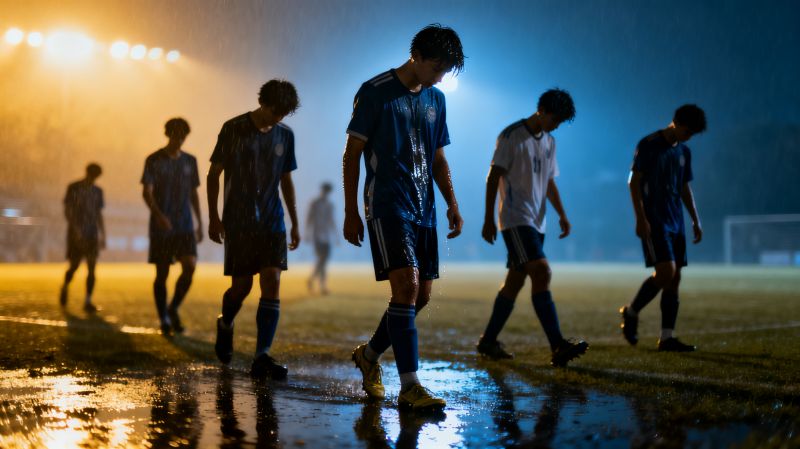
a poor one can close doors quietly, with no second chances at this age group.There’s an uncomfortable truth about this tournament that few administrators discuss openly: it exists in a strange middle ground between development and results. Coaches are hired to win, yet the primary purpose is supposed to be player growth. Those priorities clash often. A coach who rotates his squad heavily in the group stage may protect legs for the knockout rounds, but he risks losing momentum and, sometimes。his job. A coach who rides his best eleven may win the AFC U20 Championship but send three players into the senior season exhausted and injury-prone. Nobody has solved that equation. With the next edition expanding to 16 teams and a tighter schedule, the pressure will only increase. Watching these players walk off the pitch after a late defeat—heads down, shin guards unstrapped—you sense they already understand something their federations sometimes forget: this competition is a beginning, not an end, and the hardest work happens after the final whistle.